
Home / Articles / Studio inventory
Artist studio inventory vs Excel
Tracking works produced in the studio often starts with a notebook or an Excel spreadsheet. As production grows, tables get chaotic and photos scatter across the phone. What began as a practical hack becomes a bottleneck: you do not know which pieces are available, which photos belong to which title, or what you can safely send a gallerist or collector.
An artist studio inventory is not just a list of titles. It is the system that supports your catalog, future certificates, and verification of every piece when it leaves the studio.
Updated: August 8, 2026
Limits of the traditional spreadsheet
- Detached photos: An Excel or Google Sheets file does not handle high-quality images of paintings or sculptures well. You end up with WhatsApp folders, Drive, and the camera roll with no clear link to each row.
- No shareable public records: If a gallerist or collector asks about five available pieces, you export PDFs by hand or write very long emails.
- Data-loss risk: A file stored only on the studio computer can corrupt or disappear without backups.
- No temporal traceability: Excel does not prove to third parties when an artwork record was created or edited. For the market, an editable cell is not a verifiable register.
- Confused statuses: “Available,” “reserved,” “on exhibition,” and “sold” mix in improvised columns. After a few fairs, nobody remembers the real state.

Checklist for a usable studio inventory
Before you migrate or reorganize your archive, make sure each work has at least:
- Clear identity: definitive title (or labeled provisional), year, and an internal number if you use series or batches.
- Measurements and support: height × width (× depth if needed), technique, and materials.
- Commercial status: available, reserved, on loan, sold, or archived.
- Visual register: at least one sharp front photo; ideally verso, signature detail, and a studio context image.
- Physical location: studio wall, storage, frame, gallery consignment, or buyer’s home.
- Associated documentation: if a certificate, seal, or verification link already exists, it should be tied to the same catalog record.
- Brief provenance notes: date of first exhibition, fair, or relevant sale—without turning the record into an endless diary.
If two or more of these points are missing for most of your pieces, the spreadsheet is no longer doing its job.
Typical mistakes when inventorying the studio
- Cataloging only what is “important.” Minor works, finished sketches, or studio proofs also circulate. If they are not in the catalog, you will not certify them coherently tomorrow.
- Using filenames as the only identifier.
IMG_4582.jpgis neither a title nor proof of authorship. - Duplicating records when renaming. Changing a title without keeping history creates two “originals” in the archive.
- Updating Excel after the sale. Inventory should reflect status at reservation or shipping—not weeks later.
- Separating photos, prices, and certificates across three systems. When a collector asks for verification, you waste time reconstructing the piece.
A digital catalog built for the artist’s flow
An artist studio inventory should be fast, visual, and easy to update between brushstrokes.
In Uniiku, cataloging is designed to save time: you upload photos of your work and the assistant drafts the technical record (title, support, measurements, description).
From the third work registered, the system learns your usual vocabulary and suggests fields for you, cutting admin work to seconds. The catalog stops being a weekly chore and becomes a session-closing habit in the studio.
Signs your system no longer scales
Change method when any of these signals appear:
- It takes more than fifteen minutes to prepare a dossier of three available works.
- You cannot say with certainty how many pieces are ready to sell today.
- A collector asks for “the certificate” and you improvise a generic PDF.
- High-resolution photos live on one hard drive and the price list in another file.
- You want to issue seals or certificates, but you lack homogeneous records to attach them to.
At that point, inventory stops being an internal file and becomes commercial infrastructure: catalog, verification, and—when needed—a certificate with blockchain as notary of integrity.
Mini-case: from 80 Excel rows to a shareable catalog
A painter with mixed production (oil and works on paper) kept an Excel file with 80 rows for three years. The columns looked correct on paper, but photos lived in three different folders and several “available” pieces had already sold at fairs.
Before a gallery meeting, she reorganized the archive into a digital catalog: unified titles, remeasured doubtful pieces, and uploaded front and verso photos. In two afternoons she left 62 active works with clear status and generated a public link with only the 12 pieces she wanted to show.
The result was not just order: the gallery could verify measurements and techniques without email chains, and the artist identified five works that deserved a seal and certificate because they already had potential buyers. Inventory stopped being a sheet and became the base of a professional catalog.
From private inventory to public presence
The catalog is not only an internal control tool; it is your best calling card.
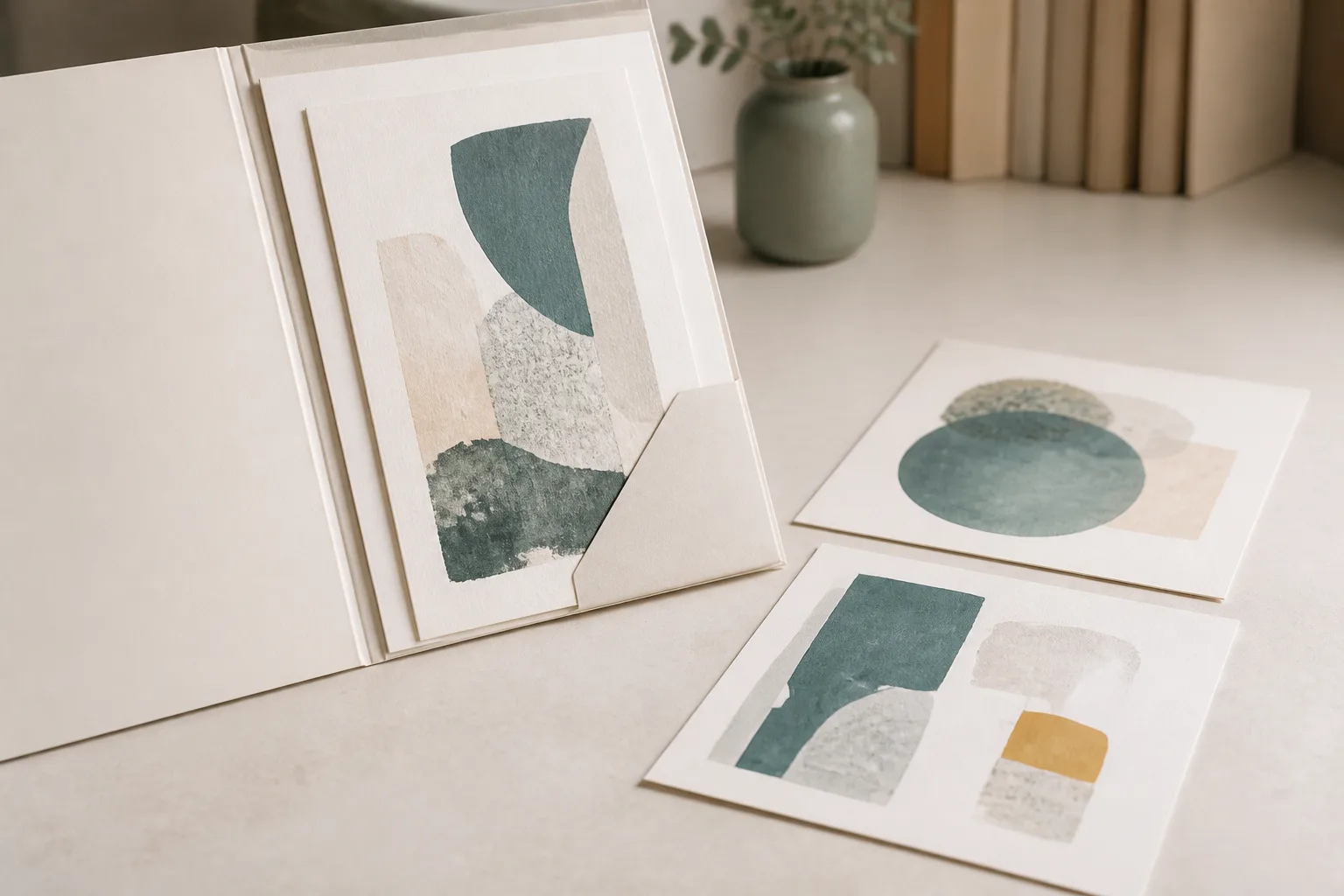
From your Uniiku panel you can generate a public link or select specific works to share with clients or exhibition curators.
Everything stays ordered in a homogeneous, professional format that signals solidity from first contact. When you later certify a piece, the seal and verification rest on a record that already existed—not on a PDF improvised the night before.
A usable inventory shortens every commercial conversation: availability, measurements, photos, and verification live in one place, so you spend less time reconstructing the archive and more time placing work.
Related articles
Frequently asked questions about studio inventories
Does creating a studio inventory in Uniiku cost anything?
No. The digital catalog and technical records are free with no time limit. You only buy seals if you decide to physically certify a piece.
Can I export my records if I change systems?
Yes. Your information always belongs to you, and you can consult or share your records at any time.
Should I also inventory older works still in the studio?
Yes—especially if they may sell or go on loan. Start with available pieces and sold ones with an identifiable buyer; that way the catalog reflects real production and makes future certificates easier.
Move from spreadsheet to professional catalog
Organize paintings, sculptures, and series in minutes with the Uniiku assistant.