
Home / Articles / Sculpture and 3D art
Certify sculpture and 3D art: bronze, ceramic, and resin
Unlike painting on canvas or drawing on paper, sculptures and three-dimensional artworks (bronze, ceramics, wood, resin, or 3D-printed prototypes) pose specific challenges for physical certification and conservation.
How can you apply a tamper-resistant certificate of authenticity to a three-dimensional object without altering its surface or diminishing its aesthetics? The answer is a clear volumetric catalog, a well-placed seal, and verification that shows the piece from the angles that matter.
Updated: August 8, 2026
Particular challenges of sculpture and 3D pieces
- Irregular or exposed surfaces: Wax, bronze patina, or a matte ceramic finish do not always allow labels to be affixed directly.
- Mold and cast control: In bronze casting or resins, it is essential to control the exact number of casts in the edition (e.g. 1/8) and foundry proofs.
- 3D-printed sculptures: STL or OBJ files can be replicated, but the finished piece—polished and signed by the sculptor—is what holds artist value.
- Detachable bases and mounts: If the base separates, a seal only on the plinth does not protect the figure.
- Multiple relevant views: A single frontal photo almost never suffices to identify a unique volume.
These challenges do not prevent certification: they demand judgment in seal placement and rigor in the catalog record.
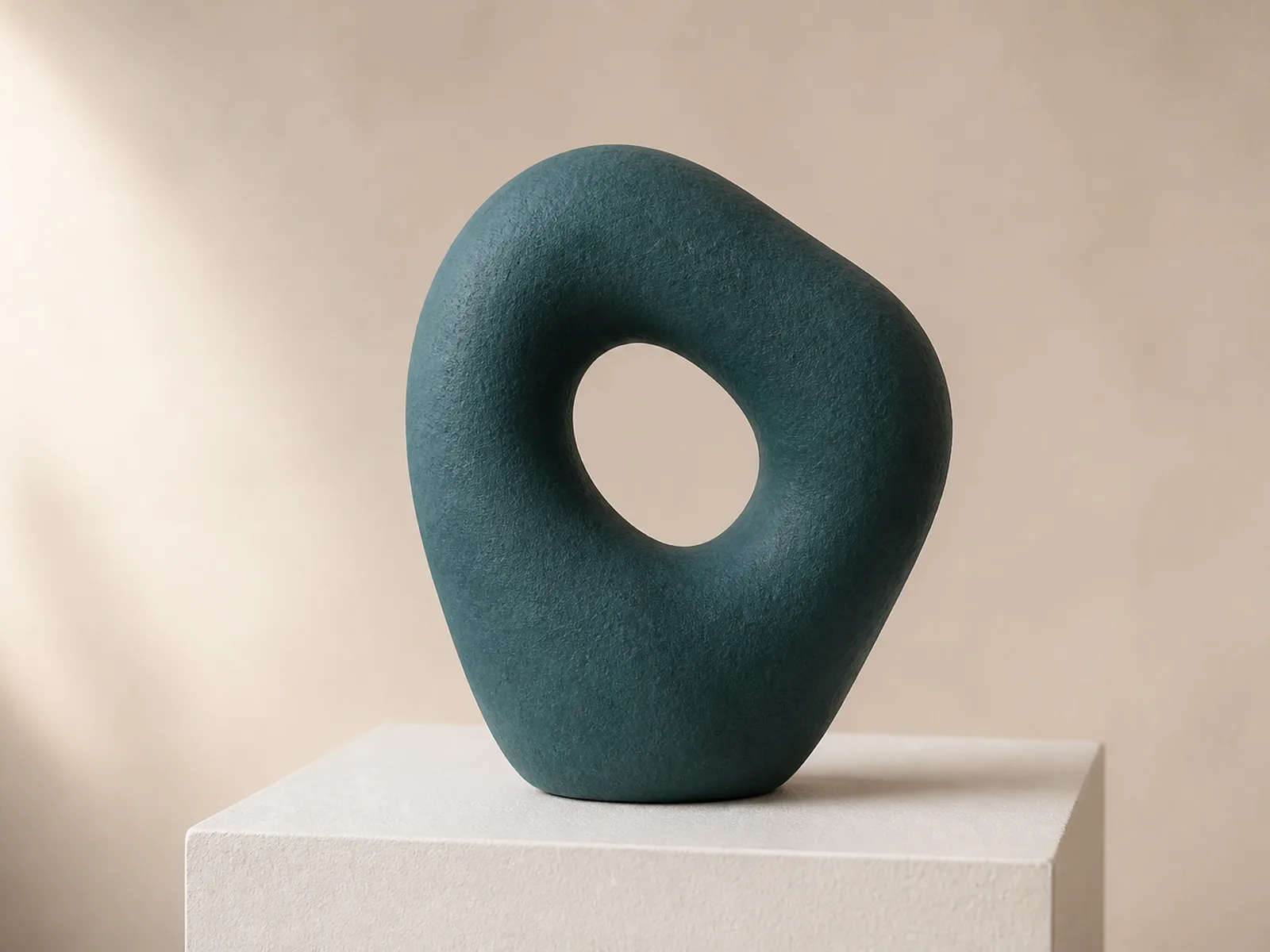
Certification checklist for sculpture and 3D art
Before issuing a certificate, review:
- Piece identity: title, year, edition number (1/8, A/P, HC) or indication of unique piece.
- Materials and technique: alloy, clay, wood, resin, 3D printing + post-processing, lost wax, carving, etc.
- Volumetric dimensions: height × width × depth, and weight if it affects shipping or insurance.
- Multi-angle visual record: at least three views plus a detail of texture, signature, patina, or print seam.
- Seal location decided: hidden base, non-visible area of the figure, or freestanding conservation certificate.
- Relation to mold or digital file: if a matrix, mold, or source file exists, note it without confusing it with the finished work.
- Catalog status: available, sold, foundry proof, artist prototype, or on deposit.
Without a checklist, it is easy to certify “the series” in the abstract and leave each cast without a verifiable identity.
Typical mistakes when certifying volumes
- Affixing the seal only on a detachable plinth. If the plinth is swapped, verification decouples from the sculpture.
- Photographing a single “pretty” angle. In 3D, identity lives in the full volume.
- Numbering from memory after the fair. The edition is declared in the catalog when it is produced, not when the last copy sells.
- Treating the STL file as if it were the work. Artist value sits in the finished, signed physical piece.
- Using the same generic certificate for the whole edition. Each copy needs its own verification and, where applicable, its own seal.
- Forgetting foundry proofs and prototypes. If they circulate, they must be labeled as such in the catalog.
Methods for applying the authenticity seal on sculpture
Depending on the material and nature of the three-dimensional piece, there are two main alternatives for linking the Uniiku seal:
1. Direct attachment on the base or a non-visible area
On wood, resin, stone, or bronze sculptures with a plinth or hollow base, the non-transferable seal goes on the underside of the base. As an inviolable label, it cannot be peeled off or transferred to another piece without destroying it. If the plinth is detachable, prioritize a hidden area on the figure itself or combine with a freestanding certificate.
2. Freestanding conservation certificate
On delicate pieces or ceramic surfaces without a fixed base, the Uniiku seal is affixed to a high-weight conservation-paper certificate that accompanies the sculpture. The QR links directly to the technical sheet with detailed photographs of dimensions, angles, and the piece’s unique texture.
In both cases, blockchain acts as notary of the certificate: it fixes the integrity of the data. The seal (or its conservation support) is what connects that digital truth to the real object.
Criteria for a solid three-dimensional technical sheet
A good sculpture record in the Uniiku catalog should register:
- Exact materials: Bronze alloy, clay type, resin type, fine woods.
- Execution technique: Lost wax, direct modeling, mold casting, direct carving, or 3D printing with manual post-processing.
- Volumetric dimensions: Height × Width × Depth (and weight if relevant).
- Foundry / Studio: Name of the foundry or studio responsible for production, if any.
- Edition and variants: 3/8, artist’s proof, prototype, unique piece.
- Enough images for verification: the collector should be able to recognize the piece when scanning the certificate.
If the record looks like that of a flat painting, the volume is not yet well documented.
Mini-case: resin edition 1/8 with interchangeable plinth
A sculptor produced eight casts in pigmented resin with independent wooden plinths. At the first fair he sold two pieces with a shared PDF for “edition 1/8.” The third buyer asked how to distinguish their copy from an identical one if the plinth were replaced.
The artist reorganized the catalog: each cast received its own record (2/8, 3/8…), photos from three angles, and a unique microbubble/patina detail. The seal went on the underside of the figure—not the plinth—and the certificate became verifiable by QR. Studio proofs were registered separately as prototypes, without mixing them into the commercial edition.
The change did not alter the aesthetics of the pieces; it altered buyer trust. Verification stopped depending on “trust the PDF” and started depending on the object.
From the record to the secondary market
A well-certified sculpture travels better: insurance, gallery deposits, and resales ask for the same evidence. The catalog keeps edition coherence; the seal prevents silent transfers of authenticity; the certificate communicates; verification lets anyone check without friction.
For 3D printing, the message to the collector must be explicit: what is protected is the finished physical copy, not the reproducible file. That distinction, well documented, is precisely what preserves artist value.
Related articles
Frequently asked questions
What if the sculpture is sold with a detachable plinth?
If the plinth can be separated from the sculpture, place the seal on the underside of the figure itself, or issue the seal on a freestanding certified document that includes detailed images of the piece.
Can foundry proofs or studio models be certified?
Yes. In the digital catalog you can register pieces with the status "Foundry Proof" or "Artist Prototype," assigning a unique seal that distinguishes them from commercial edition pieces.
Does the same method work for ceramics and bronze?
Yes in logic (catalog + seal or freestanding certificate + verification), not always in placement. On delicate ceramics the conservation certificate usually takes priority; on bronze with a base, underside attachment is often viable.
Certify your sculptures and design pieces
Document your volumes in the free catalog and link them to a tamper-resistant authenticity seal.