
Home / Articles / Printed Digital Art
Printed digital art: How to sell limited physical editions with real value
Digital illustration, concept art, and generative design have reached an extraordinary technical level. Still, many digital creators hit a wall when they try to monetize their work: the digital file can be copied endlessly.
To move into the collecting market and galleries, a solid strategy is printing limited physical editions (giclée, risograph, pigment printing, or archival plotter).
Updated: August 8, 2026
The difference between selling a file and selling an artist physical edition
When you sell a high-resolution JPG or PNG, the buyer gets a computer file. When you sell a numbered limited physical edition:
- You offer an art object with tactile presence and archival quality.
- You make a clear commitment to the buyer that only N copies will exist (e.g. 1/25).
- You create real scarcity, which helps justify higher, more sustainable prices.
That difference is not cosmetic: it changes the buyer type, the sales argument, and the commercial lifespan of the piece.
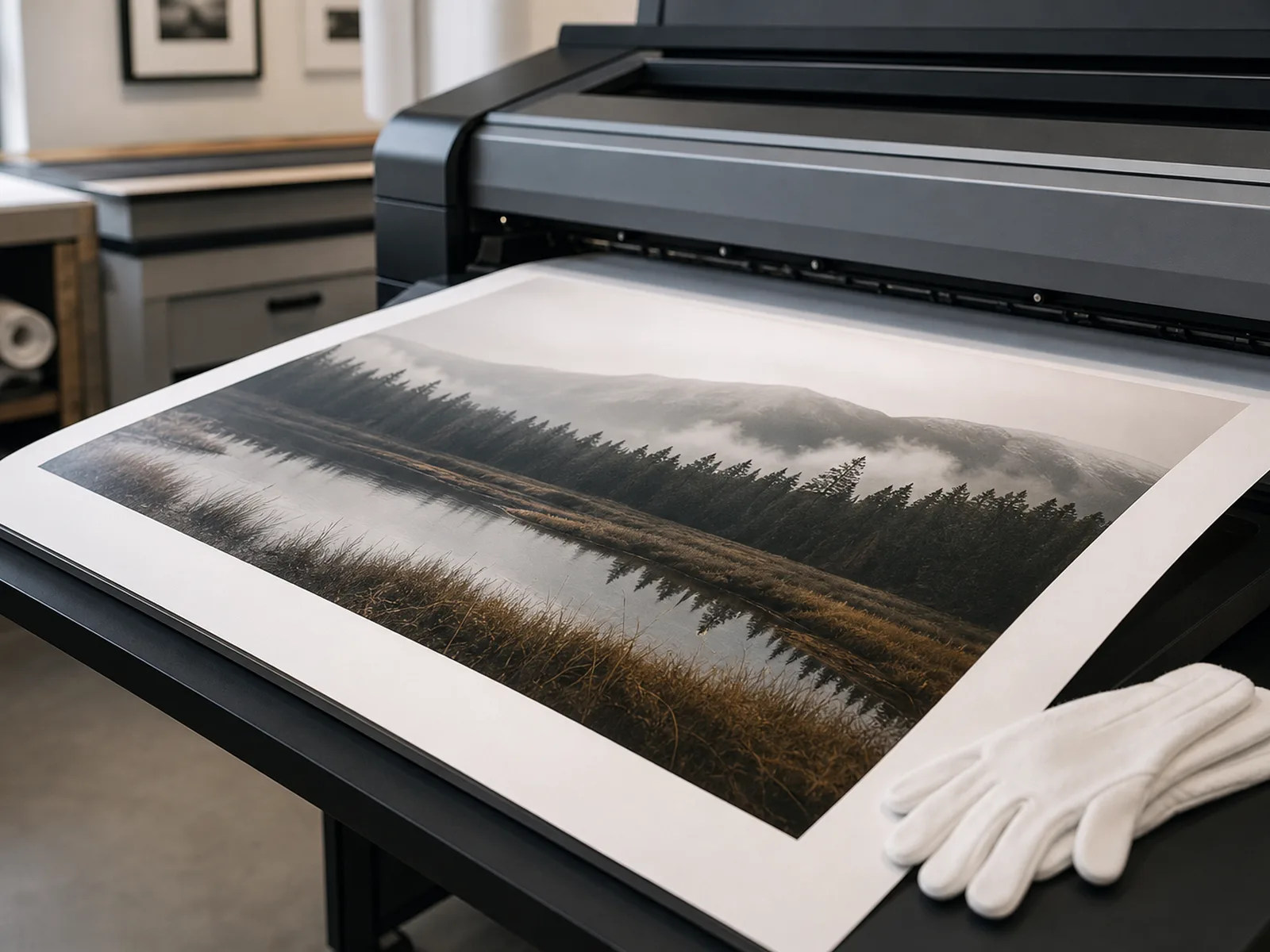
Requirements to certify a printed digital art edition
For your physical prints to read as artist work rather than a commercial poster, the technical sheet should include:
- Origin software or technique: Digital tools (e.g. Procreate, Illustrator, Photoshop, Blender).
- Print support: Paper type (e.g. 100% cotton, Hahnemühle Photo Rag, Canson Infinity) and weight.
- Mineral pigment inks: Giclée printing with strong long-term color stability.
- Strict numbering: Clear series count (e.g. 5/20) and Artist’s Proofs (A/P) declared.
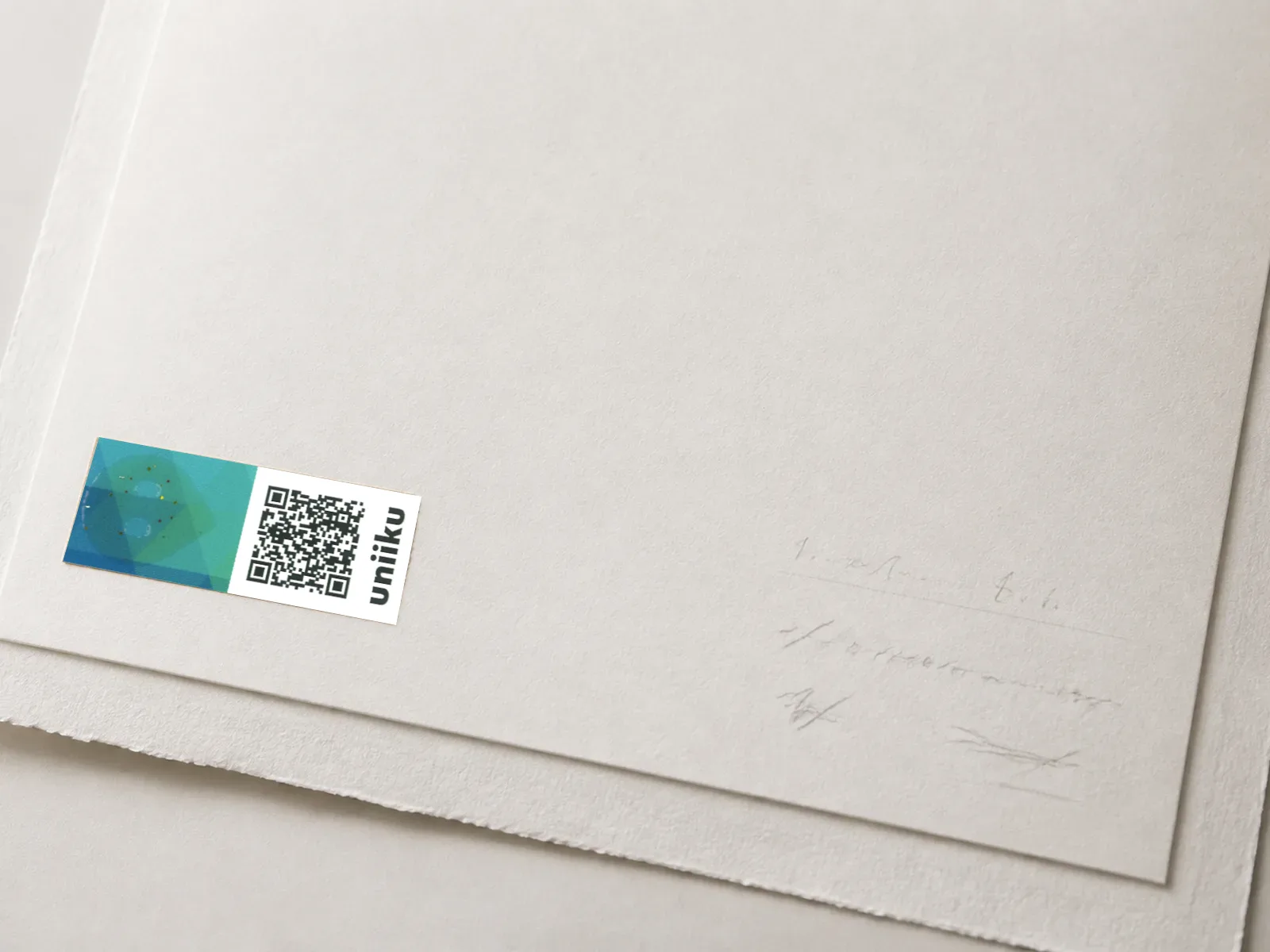
- Tamper-resistant link: Physical seal affixed to the reverse of the sheet or to an accompanying certificate.
Documenting these points does not replace market judgment, but it does reduce ambiguity and raise the perception of professionalism.
Traceability for illustrators and digital creators
A buyer of printed art wants certainty that the creator will not keep printing undeclared copies of the same series.
By registering each printed copy in a digital catalog such as Uniiku and linking it with a physical seal, the creation date and numbering become sealed and consultable. Anyone who scans the seal sees the official record for that exact copy.
That traceability also helps you: you avoid confusion between artist’s proofs, sold copies, and units still available. Keeping the series orderly protects the coherence of your offer over time.
Mini-case: from unlimited file to an edition of 20
Imagine an illustrator who sells work only as a digital download. The price stays low because the file can be copied without limit. She decides to print an edition of 20 on cotton paper, numbers each piece (1/20 to 20/20), declares two artist’s proofs, and registers each copy with a record and seal.
The result is not magical or automatic, but it changes the conversation: the buyer no longer acquires “a pretty JPG,” but a specific copy within a closed edition, with technical data and verification. That clarity makes it easier to sell at an artist print price and leaves a useful history if the piece changes hands.
Limit the edition, document each copy, and make the numbering consultable. That way your printed digital work presents as an artist edition, not an unlimited file. That discipline is the foundation for collectors and galleries to read your print as graphic work with real value.
Related articles
Frequently asked questions
Can I sell the digital file and the physical print separately?
Yes. To protect the commercial value of your limited physical editions, specify in the certificate that the printed edition is limited to the N registered copies.
How is the Uniiku seal applied on fine art print paper?
The seal can go on the reverse of the sheet (in the margin or mat) or on an accompanying document delivered with the framed work.
Bring your digital prints into the art market
Create your catalog of artist prints and give collectible value to each printed copy.