
How to create a certificate of authenticity for your artwork
If you sell as an independent artist, issuing a certificate of authenticity is not decorative paperwork: it is how you declare what the piece is, who signed it, and which technical data were delivered with it. This guide is for the issuer—you—alongside the buyer/gallery checklist.
Updated: September 6, 2026
Why the artist should issue the certificate
A hand-signed PDF or a generic template may calm nerves at handover. The problem shows up months or years later: the paper is lost, an insurer asks for the full record, or a collector wants to verify that the work on the wall is the one they bought.
Issuing the certificate with discipline means recording authorship, title, technique, measurements, and year; identifying that piece (or edition number); being able to regenerate the record if the paper is lost; and linking, when you can, the document to the physical work with a seal or verification code.
For the buyer’s angle, see what to require in an authenticity certificate. Here the focus is how to create it well from the studio.
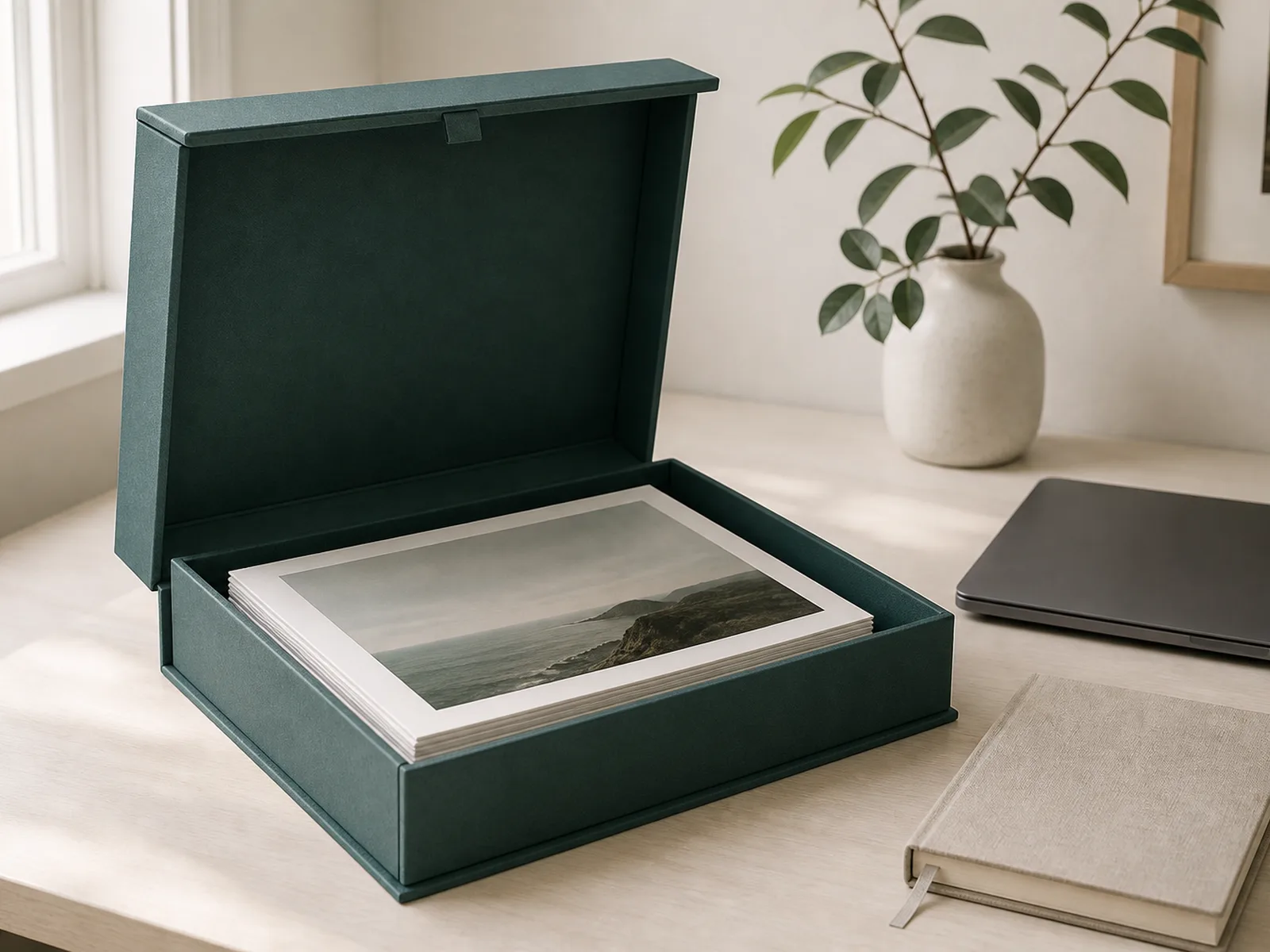
Minimum data your certificate should include
Before you design templates, lock these fields. Without them, the document is weak:
- Artist — full name (and market name if you use one).
- Title — the official title; avoid studio-only nicknames.
- Technique and materials — precise enough to distinguish the work from a similar one.
- Measurements — height × width (and depth if relevant), in centimetres.
- Year — of creation or completion; stay consistent across the catalog.
- Photo or visual record — at least one sharp image; ideally a signature or verso detail.
- Edition / number — for limited runs (e.g. 7/25, A/P). If unique, say so.
- Signature and issue date — who certifies and when that record was sealed.
These fields underpin the certificate as the artwork’s ID: without a complete record, there is no usable commercial identity.
Loose paper vs a record bound to the piece
Handing over only a sheet in an envelope creates three classic risks: loss (moves, inheritance, reframing), copying (an editable PDF reused with another piece), and unlinking (the paper does not prove it belongs to the object on the wall).
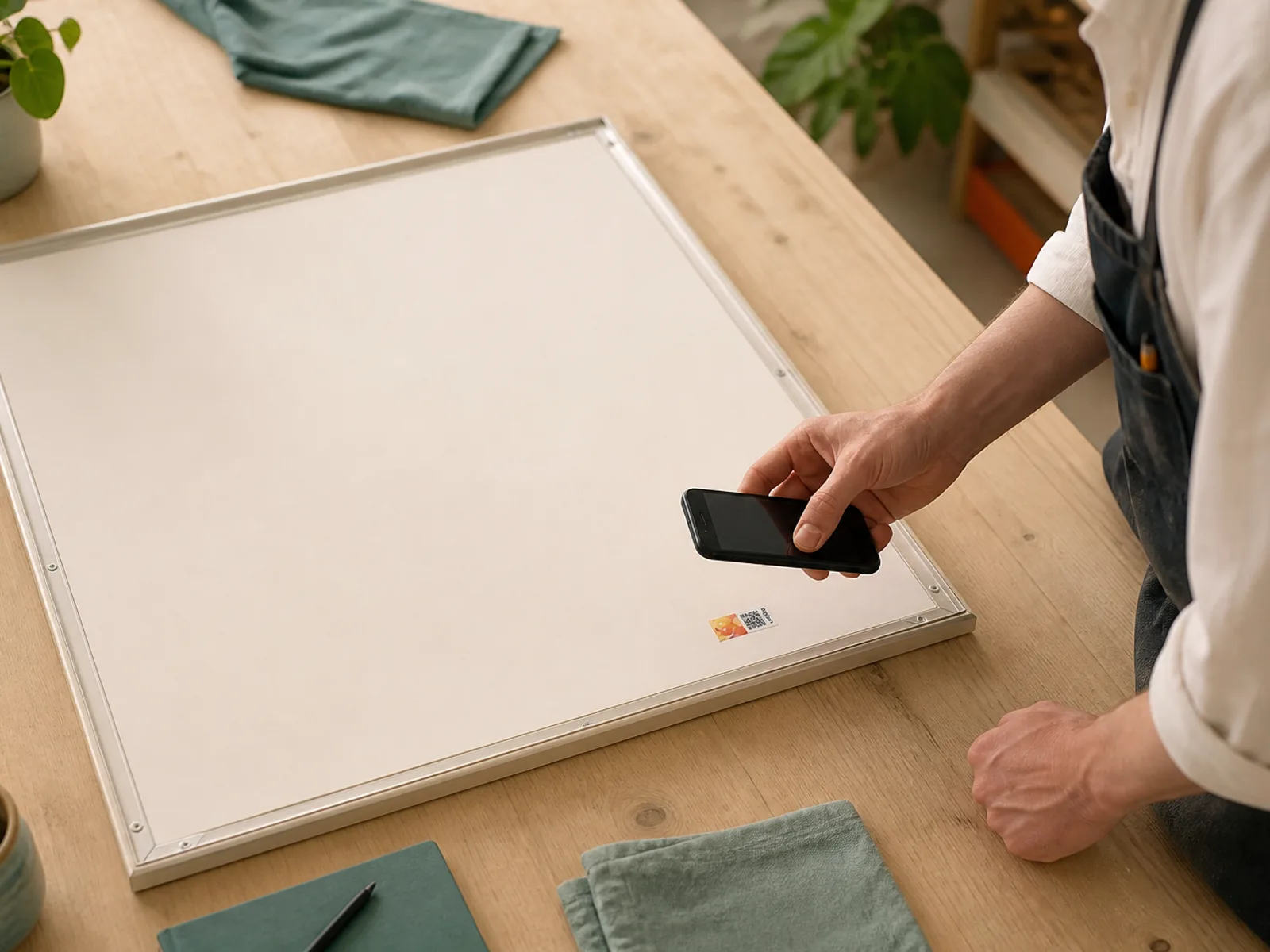
A stronger approach combines a record in a consultable catalog, a seal or marker on the work or its conservation support, and a timestamp that fixes what was declared on the issue date. Go deeper in the protect artwork guide and the Articles hub.
Common mistakes when issuing
- Generic templates downloaded online, with half-empty fields or hollow wording.
- Incomplete data — no exact measurements, no photo, unclear year.
- One sheet for the whole edition — the collector needs copy 3/20, not a generic “edition of 20” text.
- CoA with no identifiable work — a description that could fit any painting from the same period.
- Over-promising — the certificate documents and traces; it does not replace appraisals or third-party opinions beyond your authorship declaration.
Checklist before you hand the work to the buyer
- Complete technical record, consistent with the physical piece.
- Up-to-date photo (not only an old sketch).
- Correct numbering if there is an edition; no duplicate numbers.
- Certificate issued and stored in your catalog.
- Seal or code applied (if you use physical binding).
- Buyer knows how to verify or recover the record.
- Invoice or sale agreement aligned with the record’s title and number.
Five minutes of checklist prevent weeks of documentary reconstruction.
Mini-case: lost certificate and an unnumbered edition
Case A — lost paper. Lucía sells an oil at a fair with a well-written printed certificate, but no seal or link. Two years later the buyer moves and loses the sheet. For insurance, only Instagram screenshots remain. If the record had lived in the catalog and the work had verification, the buyer could recover authorship, measurements, and issue date without the paper.
Case B — edition without demonstrable numbering. A printmaker writes “edition of 30” on the label but never issues records 1/30…30/30. On resale, nobody can prove which number that copy is. Issuing a certificate per copy closes that gap.
How to start today with Uniiku
Create your free catalog at app.uniiku.net, document the piece, and when the sale warrants it, certify it with a verification seal. The full flow is in How it works.
Related articles
What to require in a CoA
Buyer/gallery checklist.
Certificate providers compared
Uniiku next to Verisart, Tagsmart, and a DIY PDF.
Certificate as artwork ID
Why documentary identity supports value.
Protect your artwork
Practical frame for traceability and seals.
Articles hub
More guides for independent artists.
FAQ
Is a certificate of authenticity mandatory?
There is no single rule that forces every artist to issue a CoA on every sale. In practice, galleries, collectors, and insurers increasingly expect it—especially for higher-priced work or limited editions. Issuing one is a professional choice: it eases resale, insurance, and trust.
Is a PDF enough?
A PDF can be a useful complement, but on its own it often fails if it is lost, edited, or not bound to the physical piece. A solid setup is a complete record, visual documentation, and—when you can—physical binding with a timestamp.
Do I need to certify every artwork?
Not necessarily on the same day. Many artists catalog the whole studio and certify when a piece is sold, placed with a gallery, or reaches a value threshold. What matters is not improvising an incomplete record on delivery day.
Issue your certificate with catalog and seal
Document your work for free and certify when the sale warrants it.