
Home / Articles / Certificate providers compared
Certificate of authenticity providers compared
Which is better, Uniiku or Verisart?
It depends on what has to stay on the work. Uniiku is a free catalog: the artist issues the record and, if they want, sticks on a physical seal that breaks if peeled. As of October 2026 one seal is €12 and a pack of five is €49, with no subscription. Verisart fits if you want a third party to host a digital certificate and a monthly plan is acceptable, or if the piece itself needs no marker. Tagsmart fits if you want a hologram on the paper certificate and a separate tag for the work. A PDF is enough when the document can be separated from the piece.
The table below compares price, who issues the certificate, copy resistance, data permanence, and what happens at resale. Third-party figures are from September 2026. Uniiku prices on Amazon.es were checked on 20 October 2026 and have not changed.
Published 15 September 2026. Updated 20 October 2026.
What to compare (not the logo)
An independent artist does not pick a certificate for the logo. They pick whether a buyer, five years on, can check that piece.
Six axes are enough: visible price, who issues it, what sits on the work, whether the marker can be copied, whether the data can be rewritten, and what happens at resale. The rest is marketing.
This page is not a ranking and it does not attack brands. Spanish-speaking markets often compare ArtCertificate or Pukkart; English search uses different names. The axes stay the same.
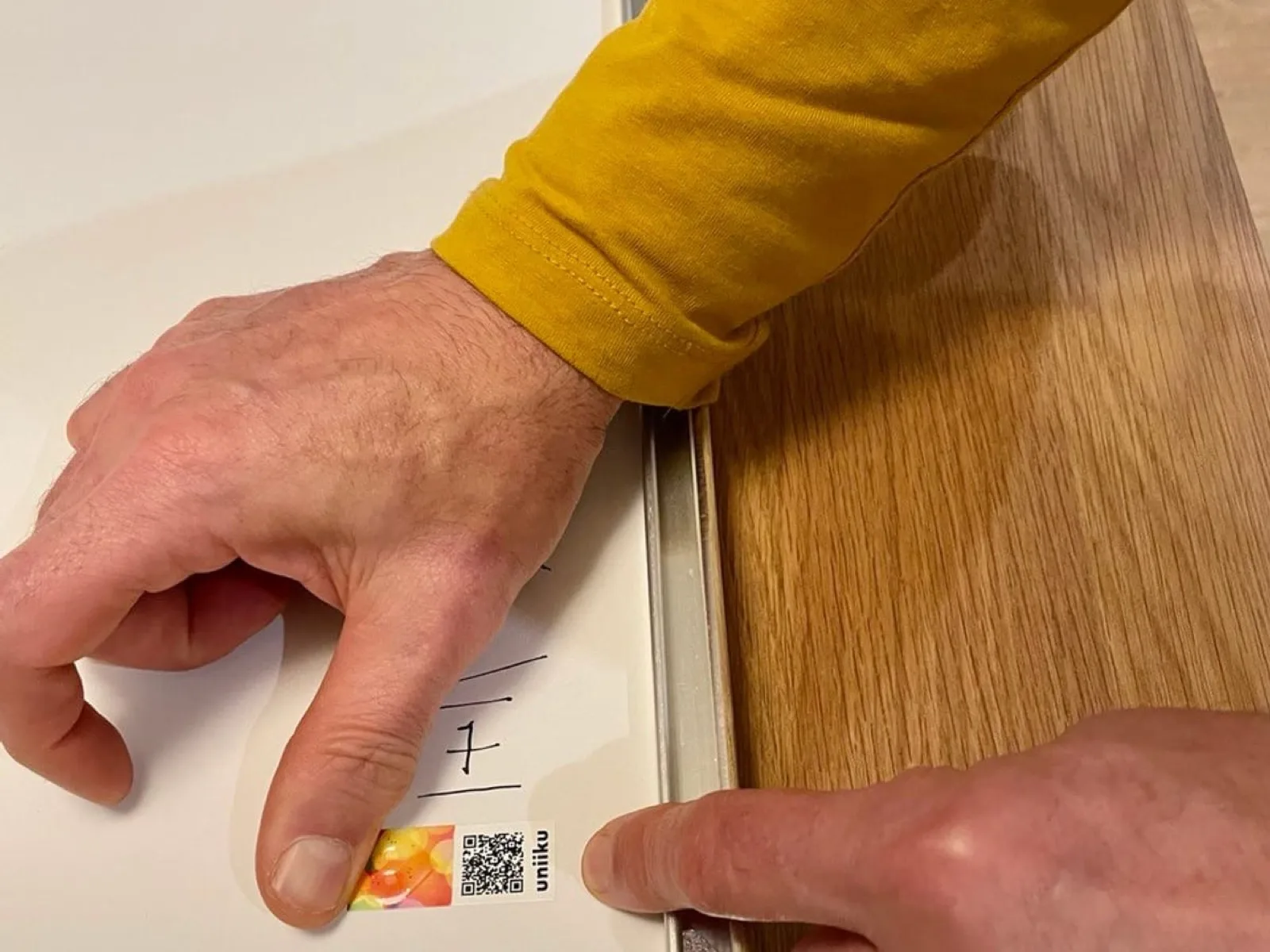
Table — figures checked September 2026
Review cadence: twice a year. Prices are what each provider published on the capture day.
| Visible price | Who issues | What sits on the work | Copy resistance | Data permanence | Resale / transfer | |
|---|---|---|---|---|---|---|
| Uniiku | Catalog free. 1 seal €12; pack of 5 €49 (Amazon.es). No mandatory subscription. | The artist, from the app, on a specific record. | Unique physical seal with QR; it destroys itself if someone tries to peel it. | One-of-a-kind seal matter: statistically impossible to make two alike; scanning compares the physical seal against its registered photo. | Record timestamped on blockchain; it is not edited “backwards.” | The certificate travels with the work via the seal. The buyer verifies by scanning. |
| Verisart | Starter free (1 COA + transfers). Growth $29.99/mo (50 COAs/mo). Extra COAs $1 on Starter. Physical optional: starter pack $25; 25 QR stickers $50; 25 NFC $100. | A verified creator. | Optional: tamper-evident QR stickers, NFC tags, holographic certificate paper. A digital COA can exist with no marker on the work. | Tamper-evident stickers and holographic paper, all optional; the base COA is digital. | COA registered on blockchain. | Transfers listed even on Starter. Linking a QR/NFC upgrades the record to “COA Plus.” |
| Tagsmart | Platform free. Certificate £12.50 inc. UK postage. DNA tags £12.50 each (canvas tags cost more). | The artist or an authorised “authority.” | The holographic seal is on the certificate (removing the tape voids it). Separate DNA tags exist for the work itself. | Holographic seal voids if removed; DNA tags mark the work itself. | Provenance platform with revocation and reissue; optional blockchain registry. | Transferable physical certificates. The collector registers free. Artwork-record transfer, replacement, and revocation. |
| DIY | Near $0 (printer, template, Drive). | The artist. | Nothing on the work, or a generic stamp/sticker. The certificate lives in a file or an envelope. | None: template and stamp are reproducible. | Editable files; no independent timestamp. | The paper is lost or photocopied. No independent check. |
Third-party sources (15 Sep 2026): Verisart pricing, Verisart phygital, Tagsmart pricing, Tagsmart certificates. Uniiku Amazon.es checked 20 Oct 2026, unchanged (1-pack B0GL3HWY1M, 5-pack B0GL4BKNSP).
Who issues the certificate
On a first sale of contemporary work, the most credible issuer is usually the author. Platforms host that declaration; they do not replace it.
The practical difference is not “who signed the PDF.” It is whether a third party can consult that declaration without calling the artist, and whether it is bound to this physical copy.
Uniiku does not replace the artist as issuer. The artist declares; the seal and the record make that declaration checkable.
What sits on the work
A certificate in a drawer does not identify the object. The marker does — if it cannot be moved intact.
- DIY / PDF: the bond is good faith. A QR printed on the sheet is photocopied with the sheet.
- Verisart: the core product is a digital COA. QR, NFC, and holographic paper are add-ons. A COA can exist with nothing on the stretcher.
- Tagsmart: the holographic seal lives on the certificate. DNA tags are a separate product if you want a marker in the work.
- Uniiku: the seal goes on the piece. If it is peeled, it is destroyed. The QR opens the record, not a loose PDF.
Comparing markers (QR, NFC, hologram, rubber stamp) is in authenticity seals for art. The question here is different: does the system you choose leave a trace in the matter?
Copy resistance and data permanence: where a seal parts ways with a sticker
Two questions break most systems:
Can the marker be copied? Catalogue holograms get replicated at scale; a printed QR even more easily. The Uniiku seal is made of unrepeatable matter: it is statistically impossible for two identical seals to exist, and scanning compares the physical seal with the registered photo of that same seal. Copying the code is not enough; you would have to copy the matter.
Can the data be rewritten? A PDF or an editable page can change without the buyer noticing. The Uniiku record carries a blockchain timestamp: it proves the data existed on that date, and the register is not edited “backwards.” Verisart also registers COAs on-chain; Tagsmart relies on its provenance platform; DIY has nothing equivalent.
No system makes the artwork uncopyable. What can be guaranteed is that the bond between piece and declaration cannot be silently forged.
What happens when the work is sold
This is the collector’s objection, and the artist’s if they think about the secondary market.
If the certificate is a PDF in the first buyer’s email, the second sale starts from zero: “do you still have the paper?” If the marker is on the work and the record can be opened, the history does not depend on an envelope.
Tagsmart built transferable physical certificates and collector registration. Verisart lists certificate transfers on the free plan. Uniiku keeps the work ↔ record link through the seal: whoever holds the piece scans and sees what was declared. We do not advertise a collector-account transfer product; we promise that verification is not lost with the paper.
The checklist is in what to require in an authenticity certificate. How to issue one is in how to create a certificate of authenticity.
How Uniiku fits
Uniiku covers three layers a loose PDF does not join: a free catalog where the record lives, a unique seal on the work that is not reused and cannot be manufactured twice, and a consultable, tamper-resistant timestamp. The process is in how it works.
Verification asks for no apps, wallets, or account: camera and browser. And there is no subscription: you pay per seal when you certify.
It is not an appraisal, not an expert report, and not an intellectual-property registry. It is documentation of this piece, attached to the piece.
If you already have a PDF, you do not have to throw it away. You should not leave it as the only proof. The wider map is in the guide to protect your artwork.
Related articles
Frequently asked questions
Does this page “win” against Verisart or Tagsmart?
No. It compares published facts (price, issuer, marker, copy resistance, data permanence, resale) with a date. Each artist chooses. What we will not do is pretend a loose PDF and a seal on the work solve the same job.
If I already have a PDF certificate, why pay for a seal?
The PDF documents. It does not bind the document to that canvas or that bronze. The seal closes that objection. You can keep the PDF as a complement.
What does the buyer see on resale?
They scan the QR on the seal and open the declared record. They do not depend on the first owner finding a file in Drive.
Do I have to certify the whole studio?
No. The catalog is free and can live without seals. You certify when the piece is sold, deposited, or worth it.
A seal that is actually bound to the work
Create the catalog for free and certify with a Uniiku seal when the piece needs it.