
Home / Articles / Independent provenance
Prove artwork provenance without a gallery
Provenance is the documented history that shows a work is authentic and came directly from the artist. Historically, galleries were the main guarantors of that history. Today, an independent artist can take that control without middlemen: with a catalog, certificate, verification seal, and blockchain as notary of the registration date.
Updated: August 8, 2026
Provenance is the documented history that shows a work is authentic and came directly from the artist. Historically, galleries were the main guarantors of that history. Today, an independent artist can take that control without middlemen: with a catalog, certificate, verification seal, and blockchain as notary of the registration date.
The documentation gap in the independent circuit
Many independent painters and sculptors sell directly from the studio, self-organized fairs, or social media.
In those direct sales, the deal often closes with a bank transfer and a shipping package—but without a technical provenance document.
Years later, when the buyer wants to resell, donate, or insure the work, they cannot prove that oil painting or sculpture is yours. The problem is not the quality of the piece; it is the absence of a verifiable history.
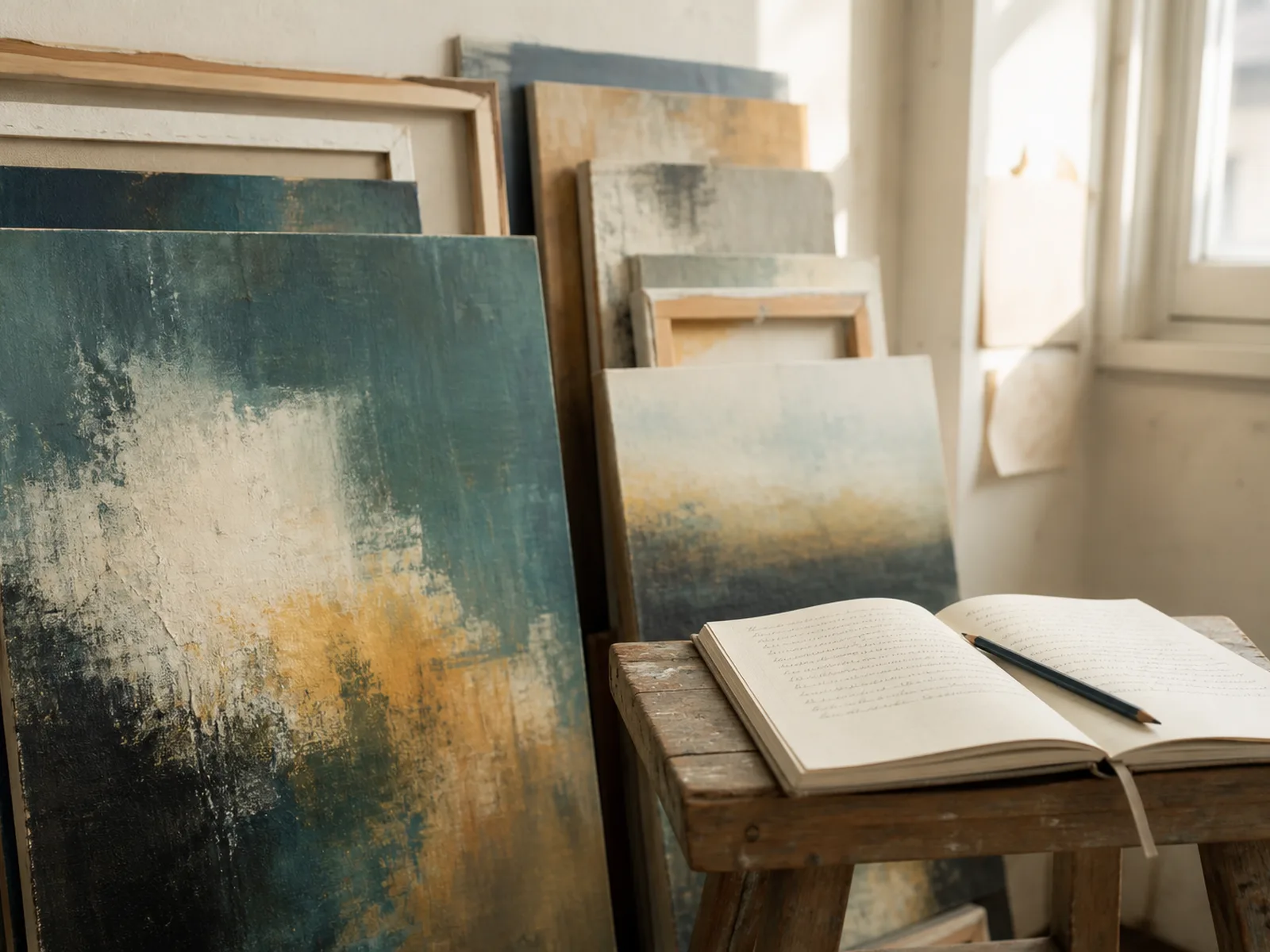
What a painting or sculpture provenance record should include
- Unalterable technical record: Title, exact dimensions, support (canvas, panel, metal), technique (oil, acrylic, mixed media), and year of creation.
- Visual register: High-resolution photos of the front, verso, and a detail of the signature or texture.
- Creation and registration date: A temporal proof of when the piece was first cataloged.
- Physical linking seal: A mark on the back that connects the physical piece to its digital history.
- Studio exit context: First direct sale, studio exhibition, fair, or commission—when relevant and verifiable.
- Current catalog status: In studio, sold, on consignment, or withdrawn.
Provenance does not require a museum pedigree. It requires continuity: who made it, what it exactly is, and how that claim can be verified.
Checklist for artists without a gallery
Use this list on every direct sale:
- Create the record before or at delivery. Do not wait until the client asks months later.
- Photos of the verso and signature. Those help most when identifying the physical piece.
- Certificate delivered to the buyer with a link or verification path.
- Seal on stretcher, base, or accompanying document when the front surface must not be altered.
- A copy of the information in your catalog, not only in the client’s email.
- Context notes (series, exhibition, commission) without inventing a history you cannot support.
With these steps, your studio does the documentary work once delegated to the gallery.
Typical mistakes in the independent circuit
- Relying only on Instagram or WhatsApp chat. Conversations disappear; the catalog record remains.
- Delivering the work without a certificate “because we know each other.” Friendship does not travel with the piece to the next generation of owners.
- Photographing only the pretty front. Without verso and details, a similar work can be passed off as yours.
- Delaying registration of older studio works. Every month without a record is a month without an early timestamp.
- Using different titles or measurements on web, invoice, and certificate. Inconsistency creates suspicion even when the work is authentic.
- Thinking provenance only matters at high prices. It also matters for insurance, donations, divorces, and modest resales.
What buyers look for when there is no gallery
Without a traditional gallery endorsement, collectors look for professionalism signals:
- Does the artist keep an orderly catalog?
- Can I verify the certificate without asking the author a favor?
- Is there a seal or physical link to the work?
- Do the technical data match what I have in front of me?
- Is there a registration date that cannot be rewritten?
Meeting those criteria does not make you an institution; it makes you a reliable issuer of your own archive.
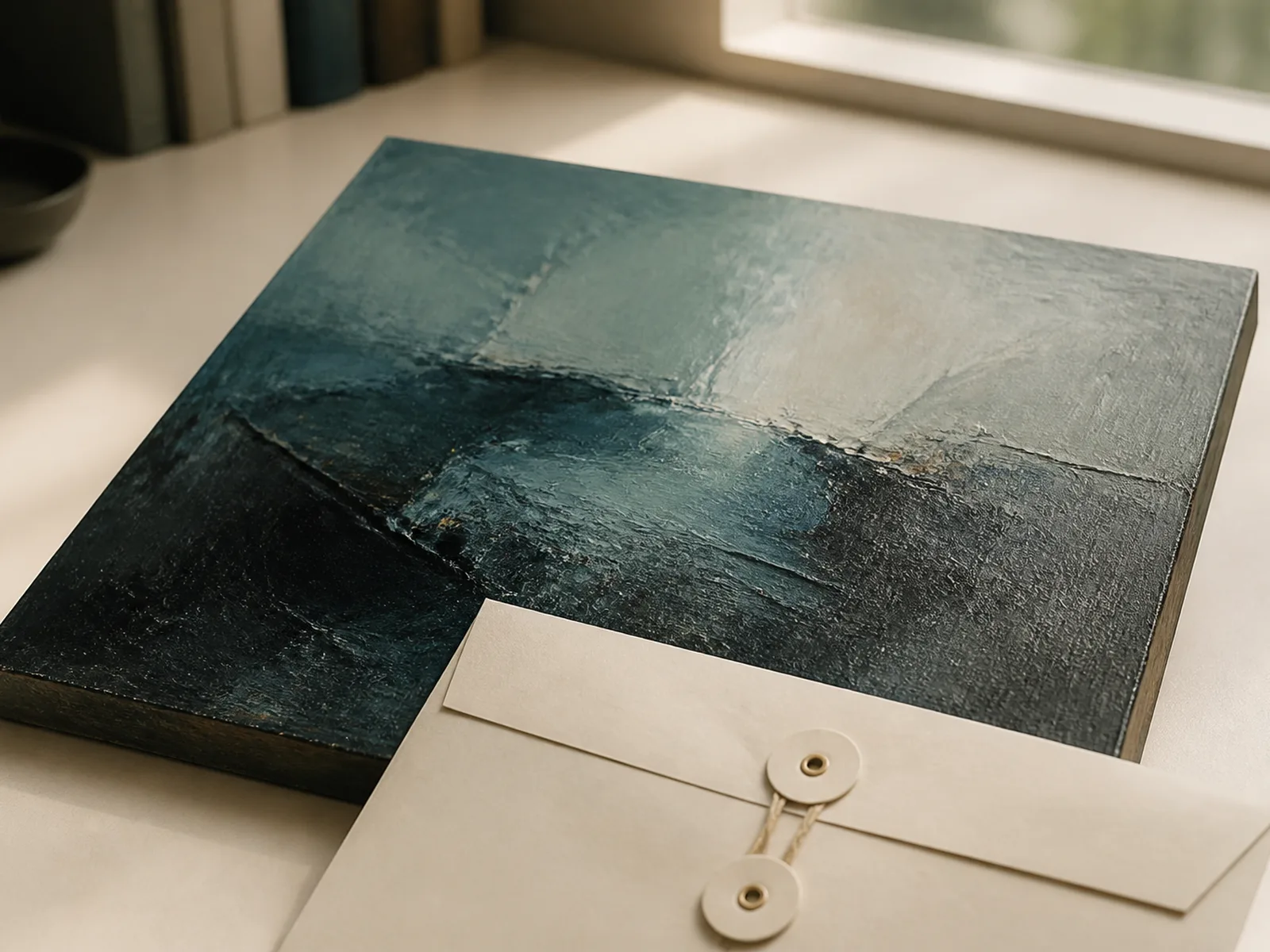
Build your archive reputation from day one
Do not wait for a major gallery to call before you organize your work. Contemporary collectors value transparency and professional rigor.
Delivering a certificate with a verifiable link and an unalterable seal shows you take your practice seriously.
And if the work changes hands later, the new owner can consult the origin in Uniiku’s official register, keeping your name tied to the piece. Your catalog becomes the backbone of provenance: it does not replace the artistic story, but it makes that story demonstrable.
Mini-case: the oil sold via Stories that nobody could insure
Clara sells an 80×60 oil directly from her studio. The buyer pays by transfer and receives the wrapped work; Clara messages a signed photo and “thanks for trusting me.” Four years later, the buyer wants to insure the piece and the insurer asks for authorship and date documentation. Clara changed phones; the chat is gone.
If Clara had created the record in her Uniiku catalog, issued the certificate, and placed a seal on the stretcher verso, the buyer could have verified the work in minutes. The mini-case shows the real cost of informal sales: not merely “losing a paper,” but failing to build provenance when it was easy to do.
How to document older works still in the studio
You do not need to invent an exact date. You can:
- Register an estimated year or period (“circa 2019”) with a context note.
- Add current front and verso photos.
- Seal the record today: the timestamp shows since when the formal register exists.
- Certify first the pieces most likely to sell or move.
Starting late is better than never starting. Independent-circuit provenance is built forward, work by work.
Consistency matters more than museum pedigree: matching titles, measurements, photos, and seals across every channel is what lets buyers, insurers, and future owners trust a studio-built history.
Related articles
Frequently asked questions about provenance without a gallery
Does certifying an oil painting alter the physical work?
No. The Uniiku physical seal goes on the stretcher verso or another safe support. If the work is delicate, it is attached to an accompanying paper certificate.
What if I do not remember the exact year I painted an older work?
You can register the work with an estimated date in your digital catalog and add context notes. What matters is sealing the record today so provenance is fixed from this point forward.
Can I prove provenance without having gone through a gallery?
Yes. A gallery is a historical path of endorsement, not the only one. A catalog with complete records, a verifiable certificate, and a seal on the piece lets you build a transparent studio history for buyers, insurers, and future owners.
Create your studio provenance history
Start registering your works without middlemen in a free, transparent catalog.