
Home / Articles / Authenticity seals
Authenticity seals for art: QR, holograms, NFC, and rubber stamps
Artists look for an authenticity seal for art because the buyer wants to see, on the piece itself, that a record exists behind it. A sheet in an envelope is not enough.
Published 18 August 2026. Updated 9 September 2026.
Why artists look for a “seal”
A collector is not only buying paint or bronze. They are buying certainty that the piece is the one the author declares. The seal is the visible gesture of that certainty: on the reverse, the stretcher, or the plinth.
That is not the same as a full certificate of authenticity. The marker points; the certificate documents. If the marker can be cloned or peeled off intact, the paper (or PDF) is loose again.
A short historical note: wax seals closed a document; they did not identify a painting. Marking is not linking.
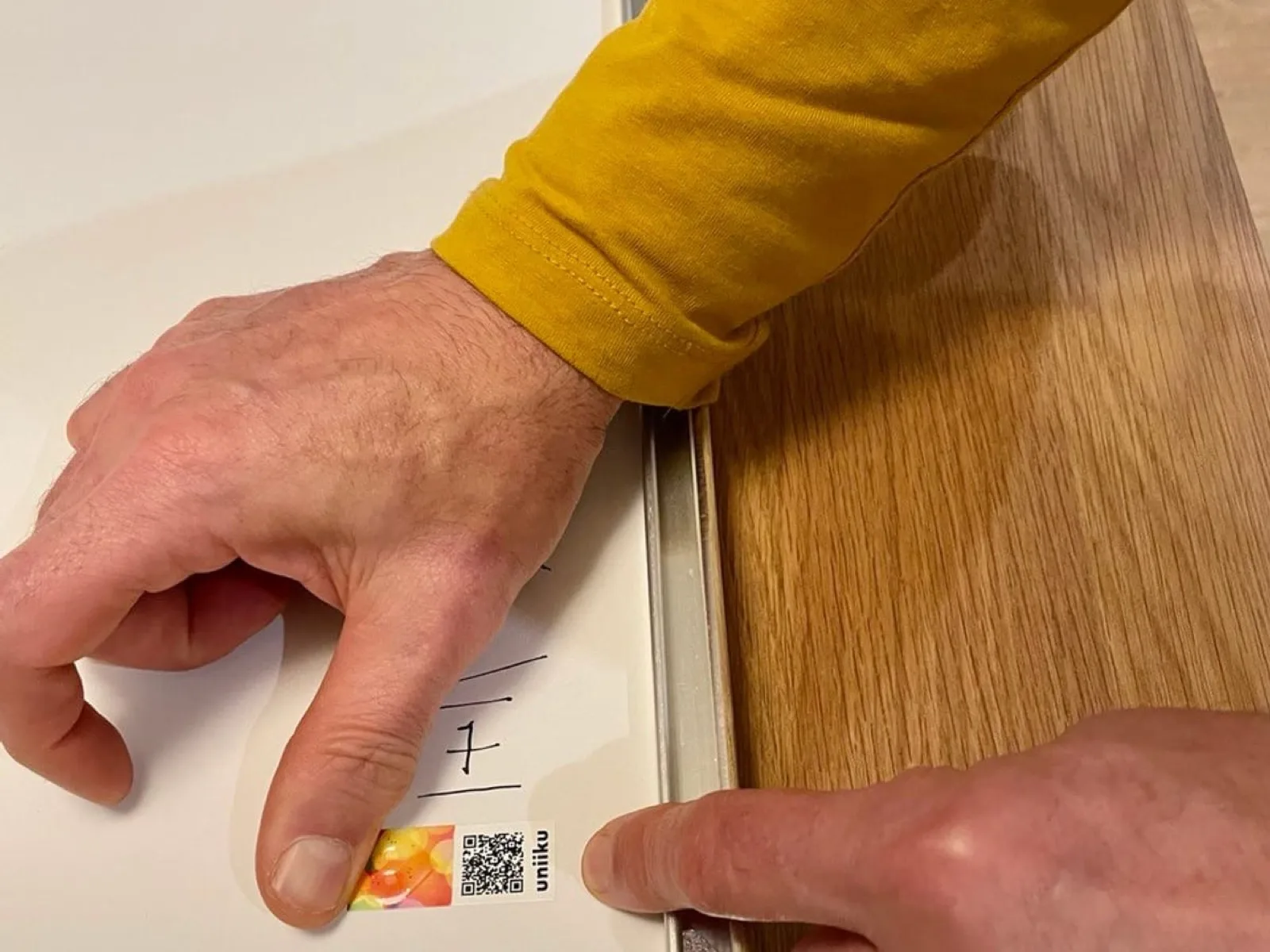
Rubber stamp / ink: identification, not a bound proof
A rubber stamp on the certificate or in the margin of a print identifies the studio or the author. It is cheap, fast, and readable.
- Anyone with a similar stamp can reproduce the mark.
- If it lives on the paper and not on the work, it separates at the first move.
- There is no independent check: you either trust the impression, or you do not.
It is a filing habit. It does not replace an anti-counterfeit label or a consultable certificate.
Holograms: a visual signal, with clear limits
A holographic label on art says “this is protected.” Shine and relief deter the amateur.
- Catalogue holograms get replicated at scale when there is incentive.
- They stay passive: they do not open a record, show a date, or get queried.
- If they are peeled and stuck on another piece, the deception travels with the sticker.
A hologram can accompany a system. By itself it does not prove provenance.
QR codes: easy access; they photocopy with the certificate
A QR certificate of authenticity is useful: the phone opens a URL. The artist does not have to explain wallets or obscure apps.
- A QR printed on a PDF is photocopied with the PDF.
- If the code points to an editable page, the content can change without the buyer noticing.
- Stuck on a poster or an envelope, it is not bound to the matter of the work.
The QR is an access bridge. The value is where it lands and whether that destination is sealed and tied to the piece.
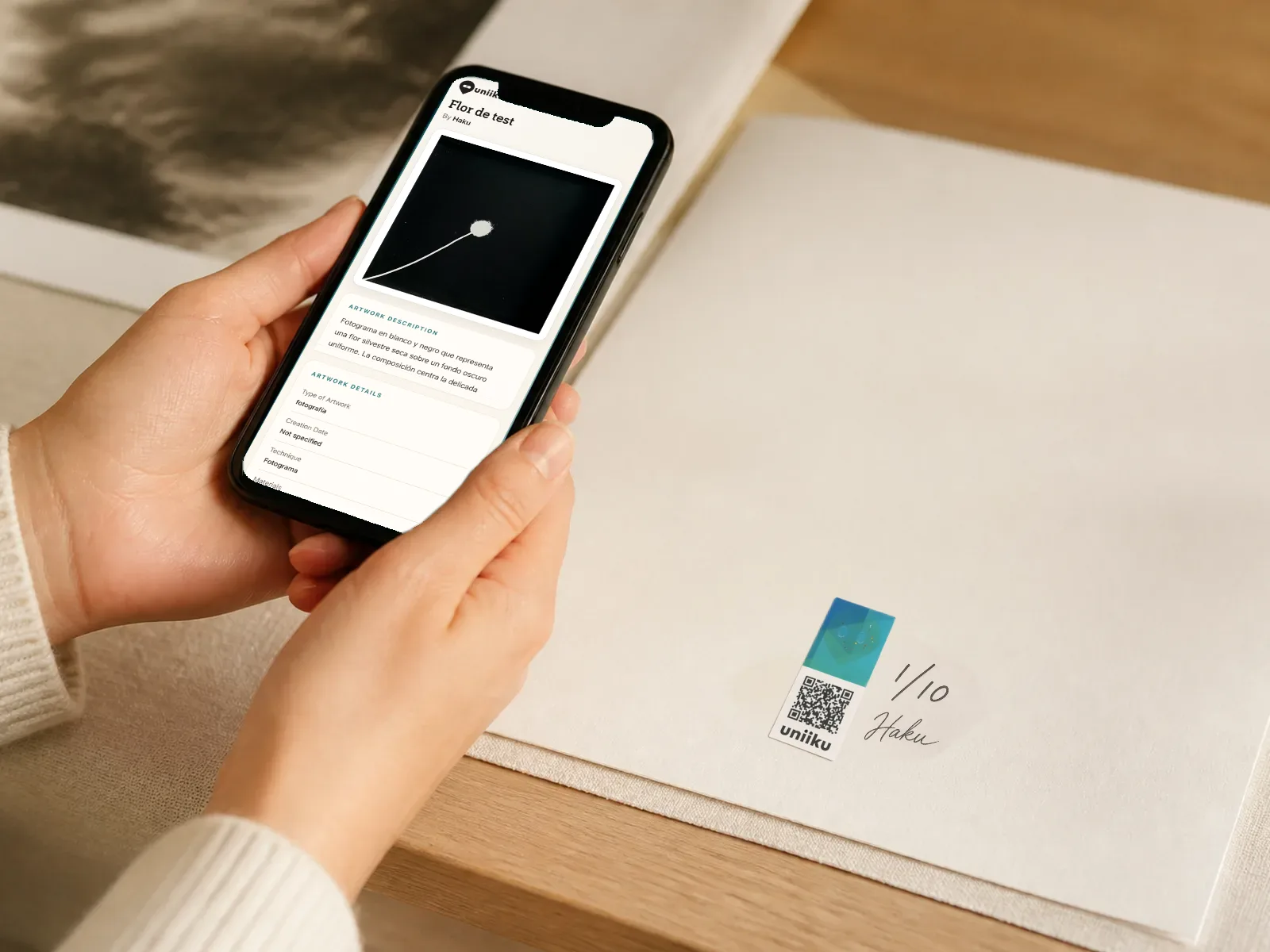
NFC: sturdier than a loose QR; still a tag
An NFC certificate of authenticity or a chip in the plinth stops someone from pointing the camera at a photo of the QR. The phone has to meet the object.
- The chip lives in a tag or a plinth. If the plinth is swapped, the NFC goes with it.
- Depending on the implementation, a chip can be cloned or replaced.
- A record is still required: NFC is not the certificate; it is the switch that opens it.
What a good system must do today
A serious marker does not claim to be unforgeable. It does three things at once:
- Work ↔ record link. The sheet describes that piece (photos, measurements, technique, edition), not a generic series.
- A marker that is hard to transfer intact. If it is peeled, it destroys itself or leaves a trace. Uniiku calls this a seal, not a catalogue “label.”
- Independent verification. Anyone can consult the sheet and a timestamp; they do not depend on the artist’s Word file.
That matches what a solid authenticity certificate must include and is distinct from an NFT that never touches the physical object.
How Uniiku fits
Uniiku joins three layers that loose markers do not cover: a catalog where the record lives, a unique physical seal designed not to peel off whole, and a dated register that is not edited “backwards.”
The step-by-step process is in how it works. The wider map is in the guide to protect your artwork.
We do not promise that nobody can ever copy a painting. We promise that the buyer can check what was declared about this piece, when, and whether the seal is still in place.
Related articles
Frequently asked questions
Is a QR on the paper certificate enough?
Not if the QR can be photocopied with the paper and there is no seal on the work. The code is the door; the proof is the piece plus the record.
Does NFC replace the certificate?
No. The chip brings the phone to the object. The certificate is still the sheet: author, title, photos, measurements, date.
What about the paper certificate?
It can coexist. Paper gets lost; the seal on the work and the sheet in the catalog can be consulted again.
A seal that is actually bound to the work
Create a free catalog and certify with a Uniiku seal when the piece needs it.